In the global sports equipment trade, the “Buy Low, Sell High” mantra is only as effective as the procurement strategy behind it. For distributors, academy chains, and large-scale retailers, the decision to engage in a wholesale pickleballs bulk buy is a calculated move toward market dominance. As a B2B specialist with a decade of experience navigating the supply chains of Asia and North America, I have observed that the most successful enterprises are those that master the nuances of tiered pricing and volume-based incentives.
Decoding the Tiered Pricing Hierarchy
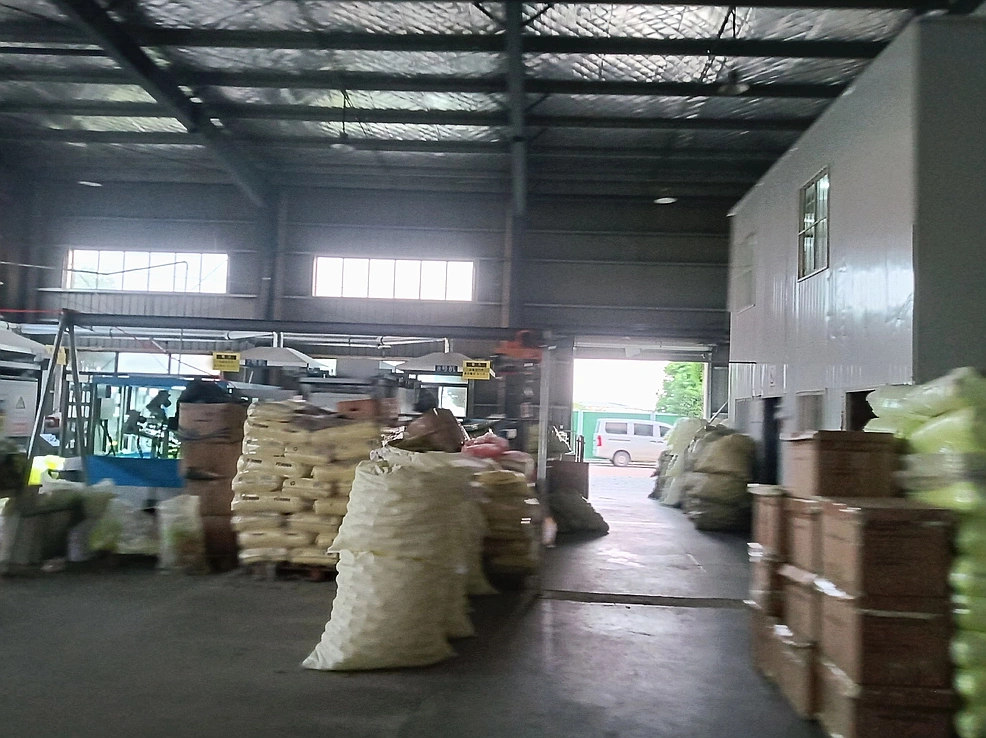
The fundamental logic of wholesale procurement rests on the principle of Economies of Scale. From a manufacturing perspective, the setup costs—including mold preparation, color calibration, and machine calibration—are fixed. When a client increases their order volume, these fixed costs are amortized over a larger number of units, allowing the supplier to pass those savings down the line.
A professional wholesale pickleballs bulk buy strategy is usually divided into three distinct tiers. Understanding where your business sits within this hierarchy is crucial for accurate margin forecasting.
The Anatomy of Volume-Based Discounts
In the pickleball industry, price breaks typically occur at specific psychological and logistical milestones. For example, moving from a LCL (Less than Container Load) to a FCL (Full Container Load) significantly alters the unit price due to reduced handling fees and optimized shipping space.
| Order Volume (Units) | Pricing Tier | Est. Unit Discount | Primary Benefit |
|---|---|---|---|
| 500 – 2,000 | Entry Wholesale | Baseline | Low inventory risk for small clubs |
| 2,001 – 10,000 | Professional Distributor | 15% – 20% | Custom branding (OEM) eligibility |
| 10,001 – 50,000 | Regional Representative | 25% – 35% | Optimized sea freight logistics |
| 50,000+ | Strategic Global Partner | 40%+ | Exclusive territory rights & R&D input |
Fixed vs. Variable Costs in Bulk Manufacturing
To understand why a wholesale pickleballs bulk buy offers such deep discounts, one must look at the factory floor. Every time a production line is switched from one color to another, or from a 40-hole outdoor ball to a 26-hole indoor ball, “downtime” occurs. This downtime is a cost.
By placing a high-volume order, you allow the factory to run continuously for days or weeks. This reduces the “startup waste” of plastic resins and stabilizes the temperature of the injection molds, resulting in not only a lower price but also a more consistent product. In my experience, the third-party rejection rate for bulk orders over 20,000 units is nearly 40% lower than that of small-batch productions because the machines have reached their optimal operating equilibrium.
Logistics Optimization: The Hidden Savings
When discussing bulk buys, the unit price is only half the story. The “Landed Cost”—the total price of a product once it has arrived at your warehouse—is heavily influenced by volume.
- Freight Consolidation: Purchasing in bulk allows for the use of 20ft or 40ft containers, which have a much lower cost-per-cubic-meter compared to air freight or courier services.
- Customs and Documentation: The administrative cost of importing 1,000 balls is roughly the same as importing 50,000 balls. Spreading these fixed fees across more units further drives down the Landed Cost.
- Packaging Efficiency: High-volume orders allow for customized “master carton” dimensions that fit perfectly onto standard pallets, eliminating “dead air” space during transport.
Mitigating Risk in Large-Scale Procurement
While the financial incentives for a wholesale pickleballs bulk buy are compelling, the stakes are undeniably higher. A defect in a 50,000-unit order is a catastrophe. To manage this risk, B2B experts utilize a “Progressive Quality Check” (PQC) system.
Rather than waiting until the entire order is finished, we implement inspections at the 10%, 50%, and 100% completion marks. This ensures that the tiered pricing benefit isn’t wiped out by a quality failure. Furthermore, for high-volume partners, we often negotiate a “Buffer Stock” agreement—the factory holds an extra 1-2% of the order to immediately replace any damaged units found during unboxing at the destination.
Strategic Timing: When to Execute a Bulk Buy
The price of raw polyethylene and energy fluctuates seasonally. Expert B2B buyers don’t just look at quantity; they look at timing. Executing a wholesale pickleballs bulk buy during the “off-peak” manufacturing months (typically post-Chinese New Year or late Q3) can often yield an additional 3-5% discount as factories look to fill their production schedules.
By combining volume-based tiered pricing with smart seasonal timing, a savvy distributor can achieve a price point that makes it impossible for smaller competitors to compete on retail price, while still maintaining healthy profit margins.
Conclusion: Building a Scalable Supply Chain
Entering the world of high-volume pickleball procurement requires a shift in mindset from “buying product” to “managing a supply chain.” The tiered pricing model is a tool designed to reward commitment and predictability.
As the sport of pickleball continues its global expansion, the ability to secure large quantities of high-quality, consistent balls at the lowest possible unit cost will be the defining characteristic of the industry’s leaders. Whether you are a national retail chain or a growing regional academy, understanding the relationship between volume, manufacturing efficiency, and logistics will allow you to unlock the full potential of your brand.
Remember: in the B2B world, you don’t make your profit when you sell; you make your profit when you buy. Mastering the wholesale pickleballs bulk buy is the first step toward that enduring profitability.