As the global appetite for pickleball transitions from a regional trend to an Olympic-level aspiration, the pressure on the supply chain has reached an all-time high. For international retail chains and global sporting goods distributors, the primary concern is no longer just quality—it is capacity. In my ten years of navigating the B2B landscape of this industry, I have seen many promising brands fail not because of their marketing, but because their manufacturing partners lacked the infrastructure for large scale pickleball balls production.
The Infrastructure of High-Volume Manufacturing
Handling orders for global giants requires more than just a large floor space. It necessitates a vertically integrated manufacturing ecosystem. To sustain a production rate of millions of units per month, a factory must control everything from the raw material procurement of high-impact polymers to the final automated packaging.
In a large-scale environment, we utilize centralized material feeding systems. These systems ensure that every injection molding machine or rotational mold receives a consistent, pre-dehumidified resin mix. This level of automation is what separates a boutique workshop from a world-class production hub capable of supporting thousands of retail outlets simultaneously.

Meeting Global Deadlines: The Power of 24/7 Automation
For a global chain, a delay of one week can result in millions of dollars in lost revenue and empty shelves. Large scale production relies heavily on “lights-out” manufacturing phases. By employing robotic arms for part extraction and sprue removal, the production cycle continues uninterrupted throughout the night.
The precision of these automated lines also directly impacts the Lead Time. When the human element is minimized in the repetitive molding and drilling phases, the rejection rate drops significantly. This reliability allows us to provide B2B clients with precise delivery windows that are essential for synchronized global marketing campaigns.
| Production Metric | Mid-Tier Facility | Large-Scale Production Hub | Strategic Advantage |
|---|---|---|---|
| Daily Output (Units) | 5,000 – 15,000 | 100,000 – 250,000+ | Absorbs seasonal demand spikes |
| Machine Downtime | 15% – 20% | < 3% | Ensures consistent stock flow |
| QC Methodology | Manual Sampling | AI-Powered Vision Inspection | Zero-defect reliability at scale |
| Tooling Capacity | 2-4 Molds | 40+ High-Cavity Molds | Simultaneous multi-SKU production |
Maintaining Consistency Across Millions of Units
The greatest challenge in large scale pickleball balls production is not making one good ball; it is making the ten-millionth ball identical to the first. Global retailers like Walmart, Costco, or Decathlon require strict adherence to technical specifications across every pallet.
To achieve this, we implement Real-Time Statistical Process Control (SPC). Every hour, automated sensors transmit data on melt temperature, injection pressure, and cooling rates to a central monitoring station. If any parameter drifts outside the tolerance zone, the system self-corrects or alerts engineers before a single defective ball is produced.
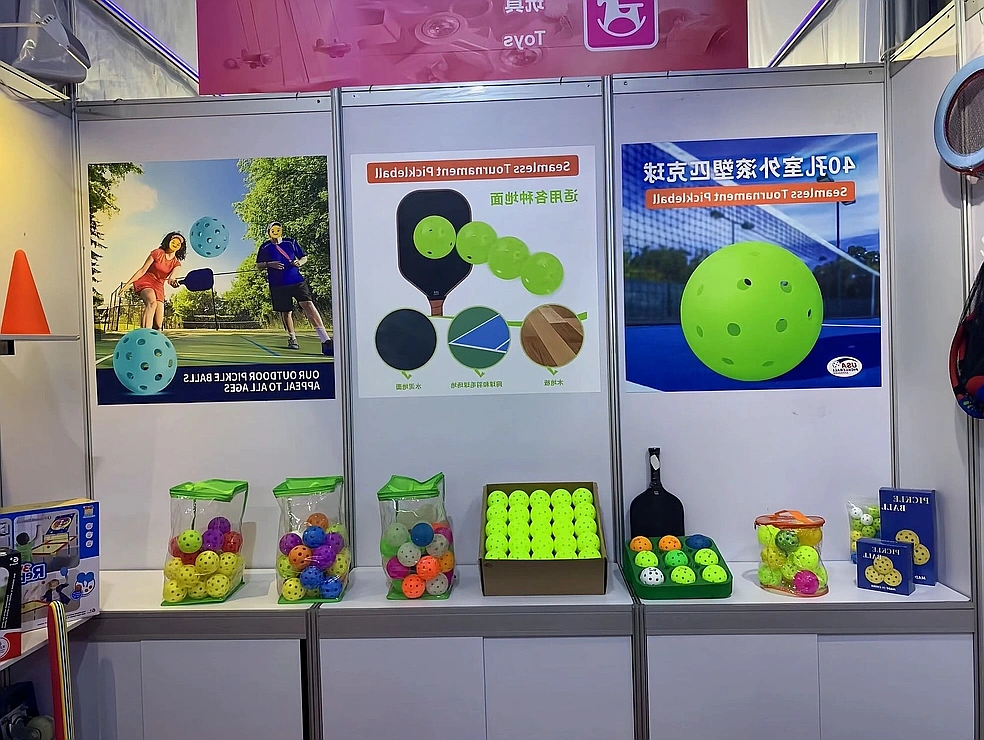
Logistics and Global Fulfillment Capabilities
Production is only half the battle. Delivering to 500 different distribution centers across three continents requires a sophisticated logistics engine. Large-scale manufacturers must offer:
- EDI Integration: Electronic Data Interchange allows our production systems to “talk” directly to the client’s inventory software, triggering production as soon as stock levels drop.
- Cross-Docking Efficiency: Packaging balls in retail-ready displays that can move from the container to the store shelf without being repacked.
- Multi-Port Access: Proximity to major global shipping hubs ensures that even during port congestion, multiple routing options are available.
Scaling Customization: The Hybrid Model
Modern large-scale production is no longer limited to “one color, one style.” Advancements in digital printing and rapid mold-change technology mean we can now offer mass customization. A global chain can order 500,000 balls, but split that order into five different regional-specific colors or patterns without sacrificing the price benefits of a bulk buy.
This flexibility is vital for retailers who want to offer “exclusive” products that differentiate their stores from competitors while still leveraging the cost-efficiencies of a massive production run.
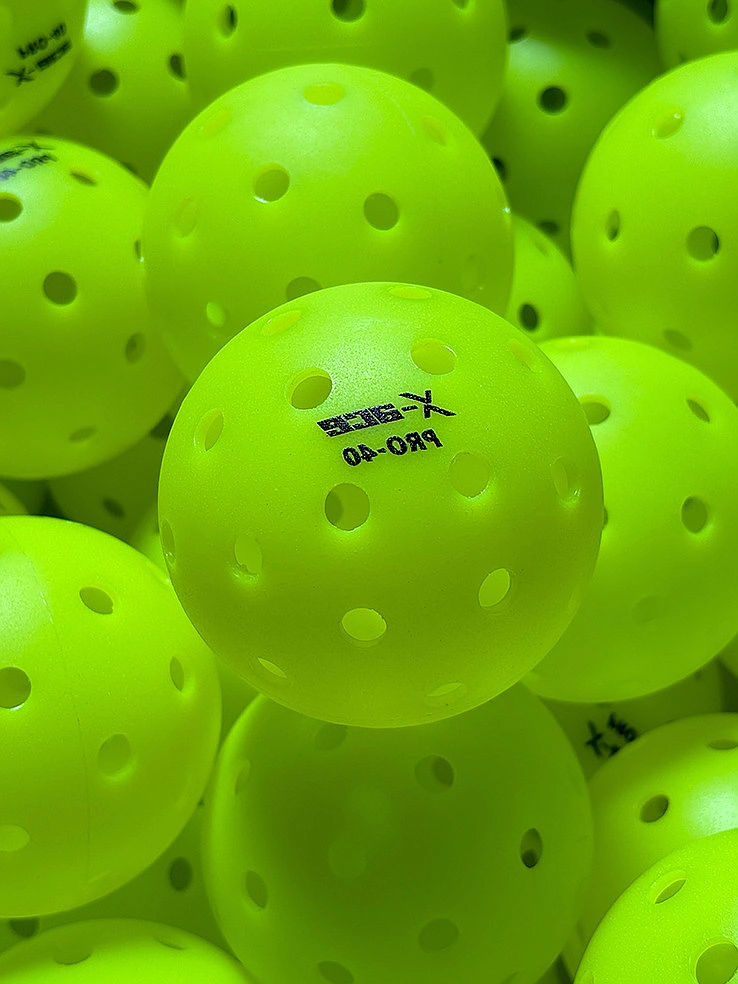
Sustainable Scaling: The Green Factory Initiative
As volume increases, so does the environmental responsibility. A factory producing 50 million pickleball balls annually must address its carbon footprint to remain a viable partner for modern B2B clients. In our large-scale facilities, we have integrated:
- Closed-Loop Water Systems: Recycling 95% of the water used in the cooling process of the molds.
- Solar-Assisted Power: Utilizing massive roof surface areas to generate a portion of the electricity required for the injection lines.
- Post-Industrial Waste Recycling: Grinding down and repurposing 100% of the production “flash” into non-performance-critical components or secondary products.
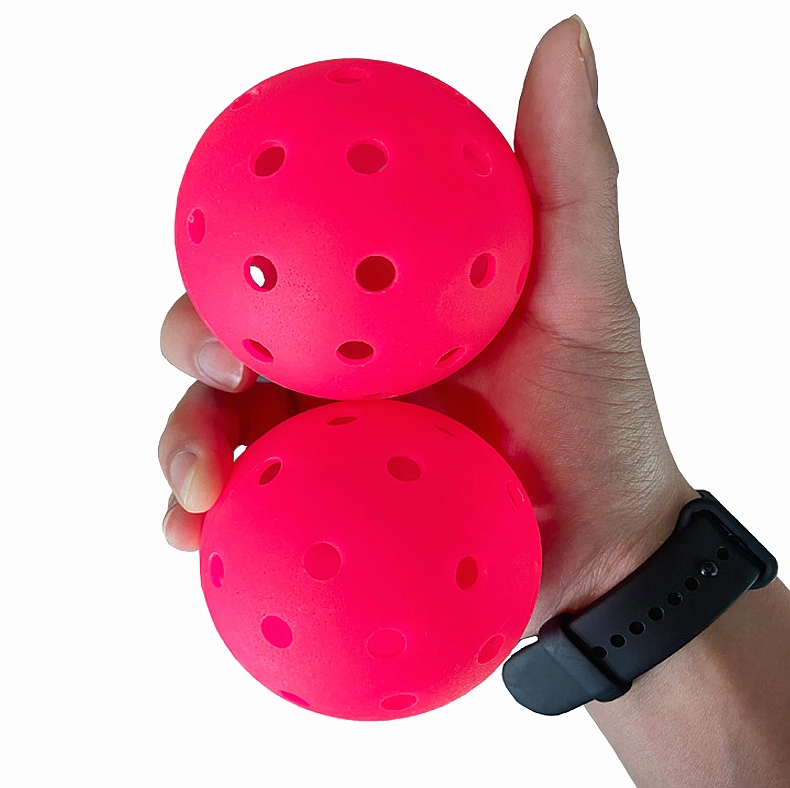
Case Study: Solving the “Big Box” Shortage
During the peak of the 2024 pickleball boom, a major North American retailer faced a total stock-out across 1,200 locations. A mid-tier supplier quoted a 12-week lead time. By leveraging a high-capacity production hub with 24-cavity molds and automated drilling stations, we were able to ramp up production to 40,000 units per day within 72 hours.
The ability to “surge” production is the ultimate proof of a factory’s strength. It requires not just the machines, but a deep reserve of raw materials and a highly trained technical staff that understands how to push the limits of the equipment without compromising the ball’s USAPA-compliant flight characteristics.
Conclusion: Partnering for Global Growth
In the B2B world, your manufacturer is your silent partner. If they cannot scale with your success, they become your greatest bottleneck. Large scale pickleball balls production is a highly technical discipline that combines the art of polymer science with the brute force of industrial automation.
When selecting a production partner for global retail or regional distribution, look beyond the sample ball. Look at the number of machines, the sophistication of the QC software, and the robustness of the logistics team. In a sport that is growing as fast as pickleball, having the capacity to meet demand isn’t just an advantage—it’s a requirement for survival.
For ten years, I have helped brands bridge the gap between “local favorite” and “global powerhouse.” The bridge is always built on a foundation of scalable, professional, and uncompromising manufacturing excellence.